
FRISCO, Texas — While the Dallas Cowboys prepare for another football season, with the NFL Draft just weeks away, the franchise’s IT team is gearing up behind the scenes to play a season of its own.
Walking through the halls of The Star, the team’s practice facility, CIO Matt Messick described wrapping up a lengthy refresh cycle to deploy Lenovo devices including laptops and desktop computers, migrating to a new ERP system and readying the data foundation for the long game — AI adoption.
Messick plans to create an AI dashboard for stadium operations staff ahead of the 2026 FIFA World Cup, which starts in June. Dallas will host nine World Cup games, which will be played at AT&T Stadium in Arlington, Texas — the Cowboys’ home stadium. But getting the Cowboys’ IT infrastructure ready for AI with a lean IT team has taken time, Messick said.
Beyond fixing systems issues and providing computers, Messick said he wants to demonstrate how technology can boost intelligent insights and improve decision-making for the franchise.
“It’s showing the business value of technology,” Messick said. “That’s our No. 1 goal.”
Starting with the foundation
Part of the team’s AI preparation has included breaking down data silos.
“Our primary focus is making sure we have a true data strategy that can support anything that we want,” Messick said.
While working on the data foundation, the IT team completed a device refresh that was delayed due to the COVID-19 pandemic. The Cowboys partnered with Lenovo in 2023 to begin the refresh.
Lenovo served as a strategic partner for the Cowboys and helped address varying device needs across the staff, said Ben Barnes, senior manager of IT enterprise support for the Dallas Cowboys.
Working with Lenovo, Barnes honed which type of processor would better support talent scouts — laptop-focused users who work on the road. Scouts frequently analyze video, and the Cowboys’ video platform represents an “extremely large database” that’s heavy on a PC, added Jason McKay, director of football administration and technology for the Dallas Cowboys.
“At the beginning, I picked a certain AMD processor, one that heated up pretty rapidly, which is OK for the standard user who’s sitting at their desk doing something, but not for the user who’s moving around, closing it, not turning it off and putting it in a bag,” Barnes said. Through several iterations with Lenovo, Barnes said they ultimately picked an Intel processor less prone to overheating to better support scouting staff.
The Cowboys also use Lenovo devices to provide analytics to coaches on the field and inventory management for team stores, according to Lenovo.
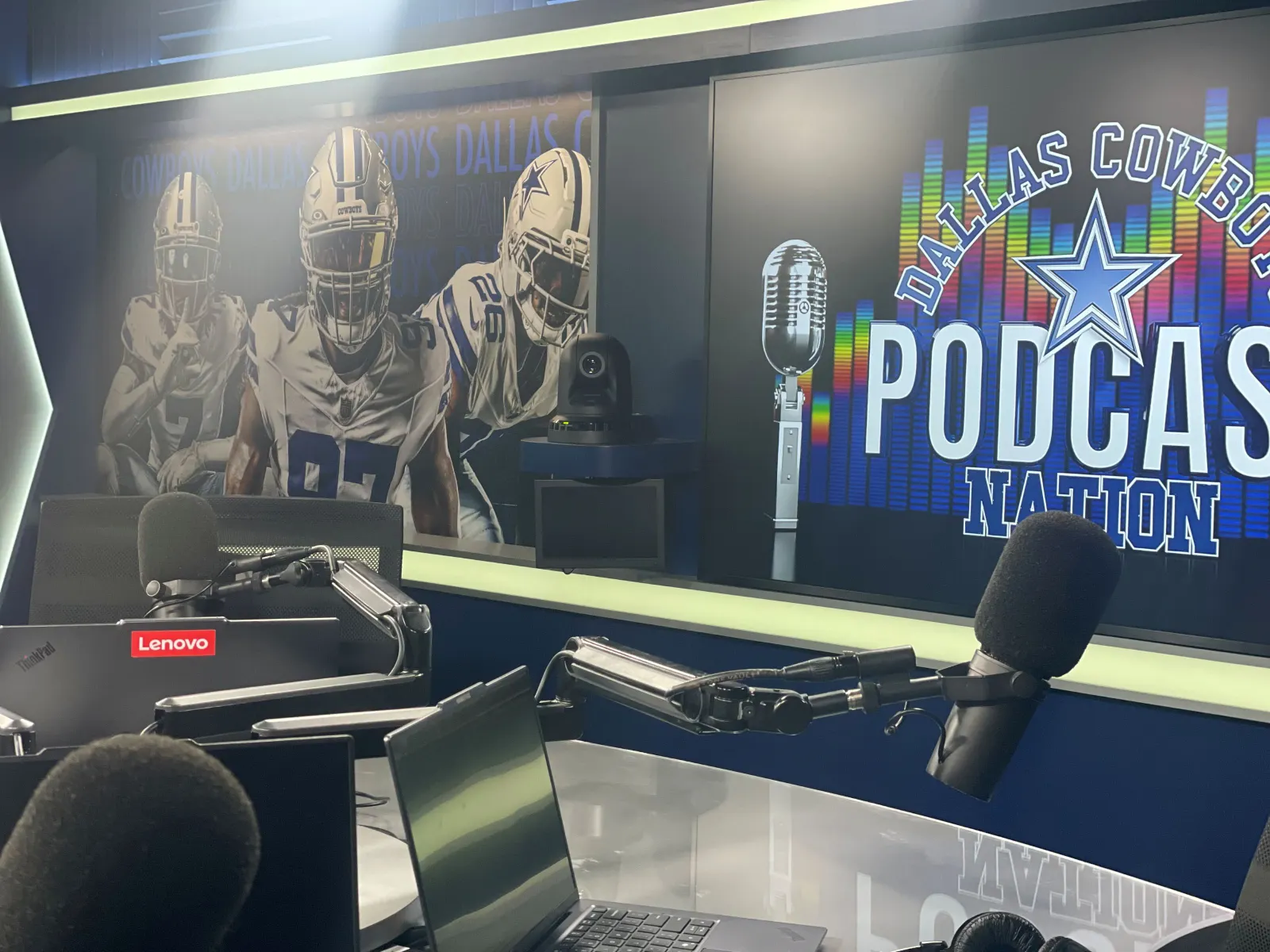
The Dallas Cowboys underwent a device refresh, switching to Lenovo devices.
Makenzie Holland/CIO Dive
In addition to cleaning up data and refreshing devices, the IT team began a two-year ERP system migration from Microsoft Dynamics AX to Dynamics 365, which is set to conclude in April.
“It’s all getting to the point where it’s time to stop the build and start focusing on the automations and leveraging data,” Messick said. “Being with the business so we can truly leverage everything we’re building.”
Setting up the AI touchdown
The IT team is in the early phases of its AI vision, still focused on clean, structured data and building its AI governance.
The NFL itself has been experimenting with its use of AI, partnering with Microsoft in 2025 to enable AI use for football and business staff. It also teamed up with AWS in 2025 to deliver better insights from the annual NFL Scouting Combine and earlier in 2024 to build a digital athlete as a way to help predict and prevent player injuries.
Messick said he has targeted specific AI use cases, from providing assistance to employees or enabling insights for scouting teams. The IT team has adopted Microsoft Copilot as the primary AI tool for staff to start experimenting with the technology, he added.
It’s critical that CIOs get some wins from low-hanging fruit along the way to highlight the technology’s value to the business. Amid AI adoption efforts, “you need everybody to work with you,” Messick said.
“You’re also changing the way people fundamentally work every single day,” he said.
The FIFA World Cup provided the Cowboys’ IT team with an opportunity to bring some of the AI plans to fruition. Messick and his team spent the last two months identifying every data feed and data point the stadium generates, such as traffic flow, Wi-Fi and ticketing data. The team plans to pull all the disparate data sources together into one AI dashboard that translates command center alerts to real world actions, he said.
“You’re really having one command center dashboard that’s translating and bringing all of this relevant data in real time to the people that need it the most,” he said.
With a number of heavy infrastructure projects behind them, Messick said his goal is to identify where AI can drive efficiencies and make employees’ lives easier as the technology matures.
“It’s the perfect time,” Messick said.






